

Natural cement was first used in the United States in the late 18th Century. In 1825, commercial mining and processing operations were begun in an area in New York’s Hudson Valley, in and around the town of Rosendale in Ulster County, and the area quickly developed into the largest single production source of natural cements. By 1830, nearly 10 million pounds per year of natural cement were being produced, marking the beginning of its commercialization. Ultimately, more than 71 sites in 17 states were producing a total of nearly 300 million pounds per year of natural cement in the late 19th Century. Collectively they became known as “Rosendale Cement”, the term becoming synonomous with “Natural Cement”.Accept No Substitutes!
Natural Cement History

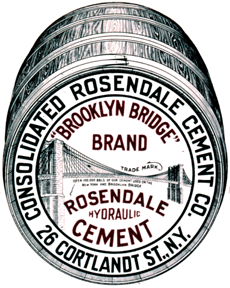
As the Industrial Revolution began, the need arose to more quickly construct large masonry buildings. Fast-setting Natural Cement mortars proved more efficient than traditional mortars based on lime and sand. The advantages in construction of military fortifications were also soon realized, beginning the long-term use of Natural Cement by the U. S. Army Corps of Engineers. By 1850 annual consumption of natural cement grew to more than 300 million pounds.
Over the course of the 19th Century, the United States grew from a rural, agrarian economy to an urbanized industrial power. Early concrete, like the supports for the Brooklyn Bridge, began changing the face of American cities. Canals like the Delaware and Hudson helped to speed delivery of materials to their markets. Later, expansion of rail systems further accelerated transportation of passengers and goods. Construction of the Pennsylvania Railroad tunnels and Grand Central Station were part of that growth. In New York City, construction of the first light rail rapid transit system was beginning. All of these projects utilized Natural Cements.
As the 20th Century began, demand was for still higher strength, and still faster curing cements. Natural cement usage was quickly overtaken and surpassed by portland cement. Although Natural Cements remained in use for special applications as late as the 1960’s, the last of the original Rosendale, NY mining operations closed in 1970. Fort Scott Hydraulic Cement Co., in Fort Scott, KS, closed in 1976, the last manufacturer of Natural Cement as a finished product. For almost 30 years the material was no longer available.
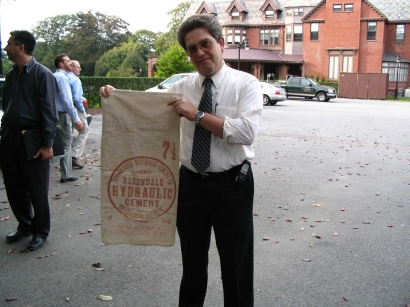
Edison Coatings, Inc. restarted commercial production of Natural Cement in 2004. Edison’s Rosendale Natural Cement Products® are historically correct materials made from authentic, 100% natural cement rock extracted from the same deposits used for Natural Cement production in the 19th Century. Edison’s Rosendale Natural Cement Products® mortars, stuccos, grouts and concretes fully utilize the extensive engineering expertise developed in the use of natural cement in the 19th and 20th centuries.
PHOTO: October 2004: Edison Coatings President Michael Edison displays an original Rosendale cement bag at a restoration technology symposium.
Beyond the historical authenticity of Edison’s Rosendale Natural Cement Products®, however, the material offers a unique balance of performance properties that can only be fully appreciated through the hindsight of nearly 2 centuries of durable service. Whether a project involves restoration of a building or structure originally constructed with natural cement, or simply would benefit from a highly compatible, durable, user-friendly cement technology, discover Rosendale Natural Cement Products®.
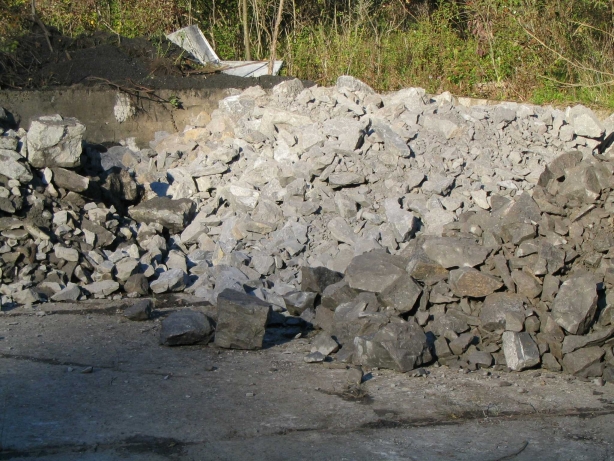
PHOTO: October 2004: Natural cement rocks, removed from different strata, are visibly different from each other in color.
Photos courtesy Century House Historical Society.
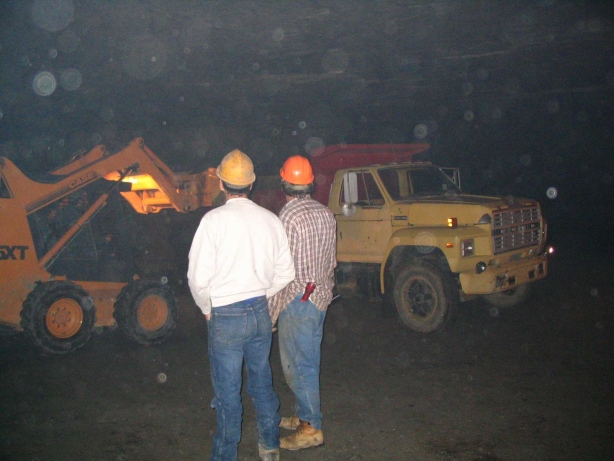
PHOTO: October 2004, Overhead clearance is limited in the upper stratum of the Rosendale mine, so natural cement rock is removed using a Bobcat and a small dump truck. Sourcing has since expanded to include other, more efficient locations