

Rosendale - Natural Cement Products

Welcome to the home of Rosendale Natural Cement Products®,
“The Cement That Built America”
News, events, history, resources and product information for authentic, historic Rosendale Natural Cement Products®.
Authenticity

Contractor:
Nicholson & Galloway, Glen Head, NY
Architect:
WJE Associates, Inc., New York, NY
Rosendale 12M Mortar Used for Restoration of the American Museum of Natural History; Project Wins Preservation Award
Custom color-matched Rosendale 12M natural cement masonry mortar has been used for repointing of the historic south range of the American Museum of Natural History in New York. Mortar analyses of the 1892 landmark facade confirmed historic documentation of the use of natural cement in the building’s original construction. The reintroduction in 2004 of authentic Rosendale Natural Cement Products® created an opportunity to maintain this unique architectural treasure’s historic integrity.
ASTM Standard C10 / 10M-14
ASTM C10, Standard Specification for Natural Cement, reinstated in 2006, was again updated in 2014. The current version of one of ASTM’s oldest standards was modified to permit the use of functional additions such as retarders and superplasticizers to facilitate use. Such additions must be disclosed on product labels, to permit purchasers to choose whether to employ such additions or not. The standard is available online at www.astm.org.
Conservators, engineers and architects specifying “natural cement meeting the requirements of ASTM C10”, can be assured they will get the authentic, traditional material used in thousands of 19th Century buildings and structures, and that it will meet the same structural performance requirements it was designed to meet over a century ago.
Edison Coatings Rosendale 10C Natural Cement and Quick-Setting Natural Cement meet the requirements of ASTM C10/10M-14.
ASTM STP 1494 - Natural Cement
A valuable book is available from ASTM. Entitled “STP 1494 Natural Cement”, including:
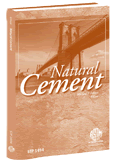
- 10 original papers presented at the First and Second American Natural Cement Conferences
- Copies of the reinstated 2006 ASTM C10 Standard Specification for Natural Cement and the original 1904 standard
- Reprinted excerpts of rare historical materials, including Young (1817) on canal construction materials, Totten (1838) on tests of lime and natural cement for use in fortifications, Vose (1857) on masonry materials for railroad construction and Cummings (1898) on buildings and structures built using natural cement.
The volume may be ordered online from ASTM International online.
Fort Jefferson, Dry Tortugas National Park
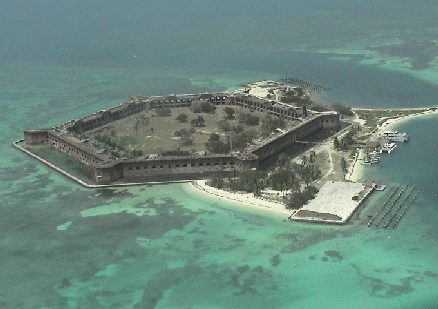
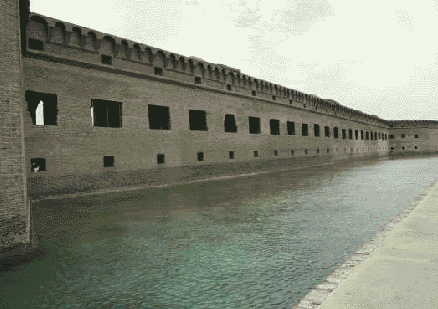
Fort Jefferson is located 70 miles off Key West in the Gulf of Mexico. Rosendale natural cement was used in the original construction of the fort, over 150 years ago. In 2005, work continued using of Rosendale Natural Cement Products® under the first major restoration phase, and Phase 3 began in late 2008. Photo 2 (below) was taken in 2010 of work completed in Phase 3 (courtesy of the National Park Service).
Natural cement has proven superior to lime-based and portland cement-based restoration products in these demanding exposures. At Fort Jefferson, much of the 150 year-old Rosendale cement mortar remains in excellent condition, in spite of the severe ocean exposure and over 100 years of neglect. Although its circumference is a quarter mile and there is a total lack of expansion joints, the structure shows no signs of thermal expansion related cracking or stress.
History of Rosendale Natural Cement
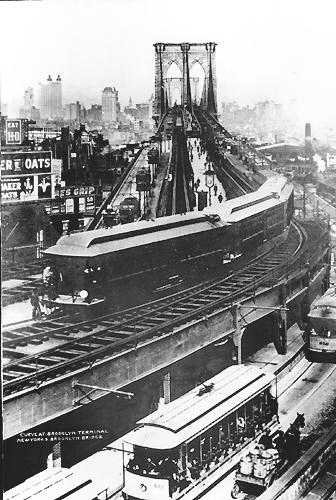

Natural Cement was used in the original construction of some of the most enduring landmarks of the nation: The Brooklyn Bridge, the pedestal of the Statue of Liberty, the wings of the U.S. Capitol, the lower 152’ of the Washington Monument, the Croton Aqueduct and dams, the Pennsylvania Railroad tunnels, the New York State Thruway, and thousands of other public works projects.
Since re-introduction in 2004, Rosendale Natural Cement Products® have been used successfully in dozens of restoration and special construction projects.
1798 – Parker’s Roman Cement is patented in England, the first natural cement.
1818 – Natural cement rock is discovered by Canvass White in Fayetteville, NY during the construction of the Erie Canal, beginning a 153-year run of continuous production of natural cement in New York State.
1824 – Natural Cement production begins in Williamsville, NY
1825 – Natural Cement limestone is discovered in Rosendale, New York.
1829 – Natural Cement production begins in Louisville, KY
1836 – Natural Cement production begins in Cumberland, MD
1837 – Natural Cement production begins in Hancock, MD
1838 – Natural Cement production begins in Utica, IL
1839 – Natural Cement production begins in Akron, NY. Though distant from Rosendale, NY, the cement produced here is described as a Rosendale cement.
1848 – Natural Cement production begins in Balcony Falls, VA
1850 – Natural Cement production begins in Lehigh Valley, PA and Cement, GA. The cement produced in the Lehigh Valley, though distant from Rosendale, NY and somewhat different in its chemical composition, is often packaged and sold as Rosendale Cement. Later, products labeled as “Improved Rosendale Cement” are marketed in this region, consisting of a blend of natural and portland cements.
1867 – Natural Cement production begins in Fort Scott, KS
1869 – Natural Cement production begins in LaSalle, IL
1870 – Natural Cement production begins in Howes Cave, NY. Cement produced here, some 75 miles from Rosendale, NY, is marketed under the name “Rosendale Hydraulic Cement”.
1874 – Natural Cement production begins in Buffalo, NY. Though distant from Rosendale, NY, the cement produced here is described as a Rosendale cement.
1875 – Natural Cement production begins in Milwaukee, WI. The cement produced here is described as a Rosendale cement.
1883 – Natural Cement production begins in Mankato, MN. The cement produced here is described as a Rosendale cement.
1883 – The Brooklyn Bridge opens on May 24, its concrete-filled caissons and granite superstructure held together by Rosendale Natural Cement.
1886 – President Grover Cleveland accepts the Statue of Liberty, a gift from the people of France, on behalf of the United States on October 28. The 154-foot, 27,000-ton pedestal is made with Rosendale Natural Cement.
1896 – Natural Cement is in production at 71 sites in 17 US states. At least 2 or 3 sites are also active in Canada.
1904 – ASTM Committee C adopts the first ASTM Standards for Natural and Portland Cements.
1954 – The New York State Thruway opens, partially paved with Rosendale Natural Cement
1970 – The last of the original Rosendale, NY cement mines is closed.
1976 – The Fort Scott Hydraulic Cement Co. in Kansas shuts down, the last producer of natural cement as a finished product. Some manufacturers of masonry cements continue to use natural cement in their production, however.
1978 – ASTM C10 Standard Specification for Natural Cement is withdrawn due to disuse.
2004 – Edison Coatings, Inc. starts production of authentic Rosendale Natural Cement Products® for use in restoration of historic structures and monuments.
2006 – ASTM C10 Standard Specification for Natural Cement is reinstated.
Natural Cement History
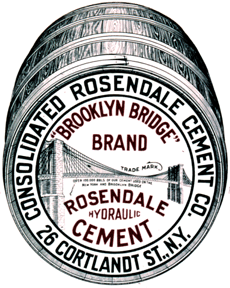
Natural cement was first used in the United States in the late 18th Century. In 1825, commercial mining and processing operations were begun in an area in New York’s Hudson Valley, in and around the town of Rosendale in Ulster County, and the area quickly developed into the largest single production source of natural cements. By 1830, nearly 10 million pounds per year of natural cement were being produced, marking the beginning of its commercialization. Ultimately, more than 71 sites in 17 states were producing a total of nearly 300 million pounds per year of natural cement in the late 19th Century. Collectively they became known as “Rosendale Cement”, the term becoming synonomous with “Natural Cement”.Accept No Substitutes!
As the Industrial Revolution began, the need arose to more quickly construct large masonry buildings. Fast-setting Natural Cement mortars proved more efficient than traditional mortars based on lime and sand. The advantages in construction of military fortifications were also soon realized, beginning the long-term use of Natural Cement by the U. S. Army Corps of Engineers. By 1850 annual consumption of natural cement grew to more than 300 million pounds.
Over the course of the 19th Century, the United States grew from a rural, agrarian economy to an urbanized industrial power. Early concrete, like the supports for the Brooklyn Bridge, began changing the face of American cities. Canals like the Delaware and Hudson helped to speed delivery of materials to their markets. Later, expansion of rail systems further accelerated transportation of passengers and goods. Construction of the Pennsylvania Railroad tunnels and Grand Central Station were part of that growth. In New York City, construction of the first light rail rapid transit system was beginning. All of these projects utilized Natural Cements.
As the 20th Century began, demand was for still higher strength, and still faster curing cements. Natural cement usage was quickly overtaken and surpassed by portland cement. Although Natural Cements remained in use for special applications as late as the 1960’s, the last of the original Rosendale, NY mining operations closed in 1970. Fort Scott Hydraulic Cement Co., in Fort Scott, KS, closed in 1976, the last manufacturer of Natural Cement as a finished product. For almost 30 years the material was no longer available.
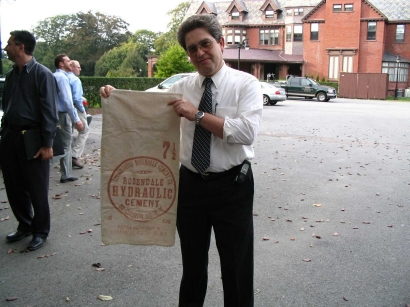
Edison Coatings, Inc. restarted commercial production of Natural Cement in 2004. Edison’s Rosendale Natural Cement Products® are historically correct materials made from authentic, 100% natural cement rock extracted from the same deposits used for Natural Cement production in the 19th Century. Edison’s Rosendale Natural Cement Products® mortars, stuccos, grouts and concretes fully utilize the extensive engineering expertise developed in the use of natural cement in the 19th and 20th centuries.
PHOTO: October 2004: Edison Coatings President Michael Edison displays an original Rosendale cement bag at a restoration technology symposium.
Beyond the historical authenticity of Edison’s Rosendale Natural Cement Products®, however, the material offers a unique balance of performance properties that can only be fully appreciated through the hindsight of nearly 2 centuries of durable service. Whether a project involves restoration of a building or structure originally constructed with natural cement, or simply would benefit from a highly compatible, durable, user-friendly cement technology, discover Rosendale Natural Cement Products®.
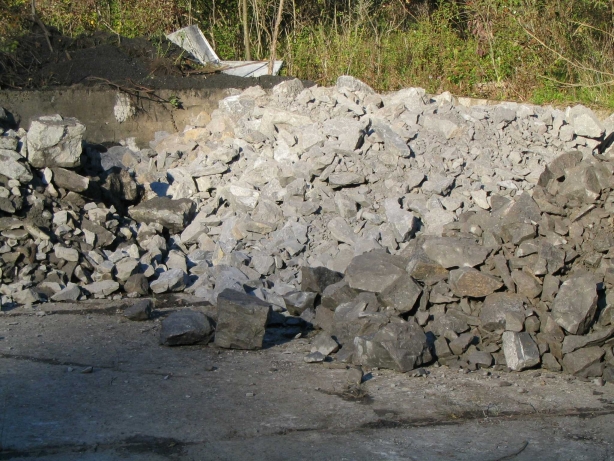
PHOTO: October 2004: Natural cement rocks, removed from different strata, are visibly different from each other in color.
Photos courtesy Century House Historical Society.
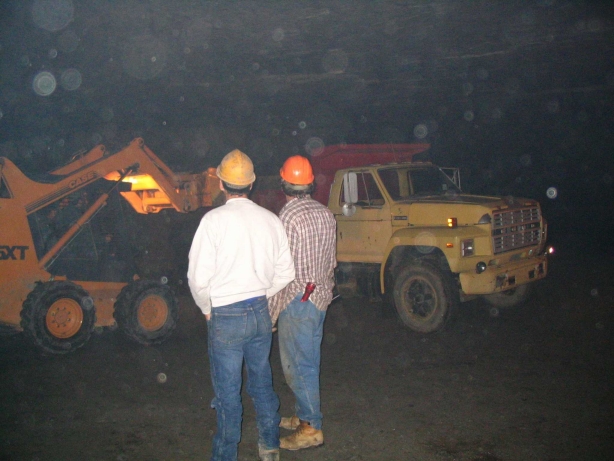
PHOTO: October 2004, Overhead clearance is limited in the upper stratum of the Rosendale mine, so natural cement rock is removed using a Bobcat and a small dump truck. Sourcing has since expanded to include other, more efficient locations
Performance
The performance of Rosendale Natural Cement® has been well-documented over the course of its long history of use. The following are typical performance data from a variety of historic sources. Modern test programs are in progress at a number of sites in the United States and in Europe. Results will be reported here as they become available.
| PROPERTY | RESULT |
|---|---|
| Set Time | >30 minutes (ASTM C10); Faster set than Portland cement, Much faster than hydraulic lime |
| Compressive Strength | Minimum 1020 psi (7 MPa) @ 28 days (1:1 with test sand) Lower initial strength than Portland cement, Comparable strength to Lime/Portland Blends and Hydraulic Lime |
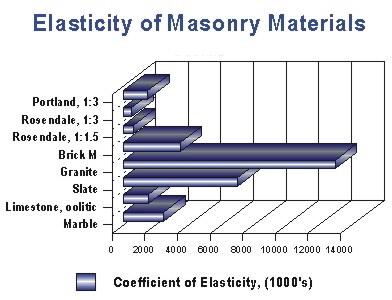
| Modulus of Elasticity | Typically 535,000-640,000 psi Lower than stone, brick, Portland cement (See chart) |
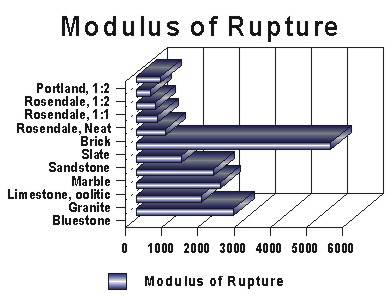
| Modulus of Rupture | Typically 400-600; Lower than stone, brick, Portland cement (See chart) |
| Fineness | Fineness specifications for traditional cements became increasingly stringent over time. Today there is no fineness requirement, only a minimum 28-day strength requirement. Typically a minimum of 70% passes a 200 mesh sieve. |
| Tensile Strength | Traditional Specifications required a minimum of: 38-70 psi @ 24 hours (neat) 87-134 psi @ 7 days (neat) 162-237 psi @ 28 days (neat) 34-50 psi @ 7 days (1:2 w/sand) 75-80 psi @ 28 days (1:2 w/sand) There is no current requirement. |
| Adhesive Bond Strength | CROTON BRICK Neat Cement: 68 psi 1:1 Cement/Sand: 40 psi 1:2 Cement/Sand24 psi FINE CUT GRANITE Neat Cement: 27.5 psi 1:1 Cement/Sand: 20.8 psi 1:2 Cement/Sand12.0 psi NOTE: These values are higher than results for lime and Portland cement. |
Chemistry
HOW IS IT DIFFERENT FROM OTHER CEMENTS AND BINDERS?
What is Natural Cement?
Natural cement is hydraulic cement made from limestone that has a high clay content (argillaceous limestone). It is different from building lime, which is made from limestone with a lower clay content, in that lime is not hydraulic (does not set under water).
Lime and Natural Cement are both produced by heating limestone to approximately 900 to 11000C, at which point carbon dioxide bound within the stone is released. In the production of lime, the burnt material is quicklime, which is then mixed with water to make building lime, also referred to as hydrated lime, or as lime putty if excess water is used. The process of hydrating quicklime is slaking, and when quicklime is slaked, it crumbles to a fine particle size. The burnt natural cement rock does not slake when mixed with water, however. Instead, it must be crushed into a powder before use. The resulting powder is natural cement, which will set when mixed with water, and hardens through a process of cement hydration.
When lime is used in masonry mortar and renders, it does not set due to being mixed with water, but rather, must react with carbon dioxide in the air in order to cure and harden. This is a slow process, often requiring weeks or months to build significant initial strength.
Portland cement is made from artificial mixtures of limestone, shale, gypsum and other additives. The mixture is heated to approximately 14000C, at which point components fuse to form a clinker. The clinker is then ground to a fine powder that sets when mixed with water.
Hydraulic lime may be made either from blends of lime and pozzolans (such as slag, trass, clay, natural cement, portland cement or ash) or by burning of limestone with naturally occurring silica and/or alumina impurities. It is related to natural cement, but contains excess free lime, allowing the material to be slaked to a fine powder after burning. This excess of lime may reduce durability, lengthen set time and diminish initial resistance to weather, however, particularly in severe exposures such as coastal and cold weather environments.
Natural cement is simply the product of burning and grinding natural cement rock. American natural cement was never a mixture of ingredients such as clay or other pozzolans and lime or hydraulic lime. The use of such artificial mixtures is historically incorrect, therefore, and it is not “replacement-in-kind”. Only authentic Rosendale Natural Cement from Edison Coatings, Inc. is an historically accurate replacement in kind for the restoration of natural cement buildings, structures and monuments.
ROSENDALE NATURAL CEMENT® vs. OTHER BINDERS
| BINDER | COMPOSITION | REACTIONS | CHARACTERISTICS | STANDARDS |
|---|---|---|---|---|
| NATURAL CEMENT | Dicalcic Silicate (Belite); Produced from argillaceous limestone | Hydration, Crystallization Upon Water Contact | Fast Initial Set, followed by slow, gradual rise to final strength. Strength of natural cement mixtures is easily modulated from low strengths similar to lime mortars to strengths approaching those of modern cements. | ASTM C10 |
| HYDRATED LIME & LIME PUTTY | Calcium and Magnesium Hydroxide; Produced from limestone. | Forms Calcite and Magnesium Carbonate w/Prolonged Carbon Dioxide Exposure | Slow set and cure, tends to react incompletely below surface. | ASTM C207 (Hydrated Lime) ASTM C1489 (Lime Putty) |
| PORTLAND CEMENT | Dicalcic and Tricalcic Silicate, Tricalcium Aluminate; Produced from mixtures of limestone, shale, gypsum, other additives | Hydration, Crystallization upon Water Contact | Controlled Set Times, Rapid Strength Gain | ASTM C150 (Portland Cement) ASTM C91 (Masonry Cement) |
| HYDRAULIC LIME | Calcium Hydroxide, Dicalcic Silicate and/or Aluminate. Produced from limestone with silica or alumina impurities, or from blends of lime and pozzolans. | Forms Calcite w/Prolonged Carbon Dioxide Exposure; Hydration, Crystallization upon Water Contact | Slower set than natural and Portland cements, faster than lime/lime putty, slow rise to moderate/low strength | ASTM C1489 |
Specifications
The proper use and specification of Rosendale Natural Cement Products® must consider the best practices developed for natural cement technology over the past 193 years. For most cases, the use of a custom prepackaged Rosendale cement mortar, render, grout, concrete or repair compound will be most effective in eliminating potential on-site errors in proportioning and/or aggregate selection.
This section is dedicated to guide specifications to assist in proper selection, use and quality control of natural cement for various restoration applications. Simply stated, specifications should require the use of natural cement meeting the requirements of ASTM C10. For applications requiring the use of Quick-Setting Natural Cement, specifications should require use of Quick Setting Natural Cement meeting the requirements of ASTM C10.
See a typical certification, as can be required.
The following repointing mortar specification is the first of a series of guide specifications. Additional specifications will be added over the next few months.
Section 04066: Masonry Repointing (Rosendale Natural Cement Masonry Mortar)
Products
Support
On-Site Training and Consultation Services are an integral part of our product stewardship. Support services for Rosendale Natural Cement Products® are offered through a network of independent experts, field representatives and Edison Coatings technical staff.
We are committed to the success of every Rosendale Natural Cement Products® project, and can arrange the level of support that is most appropriate for each situation.
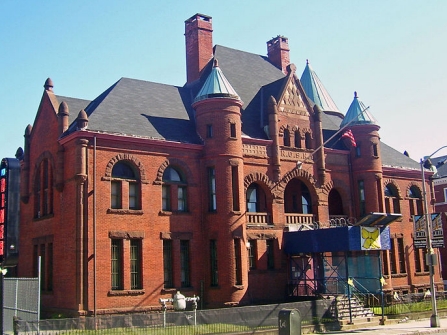
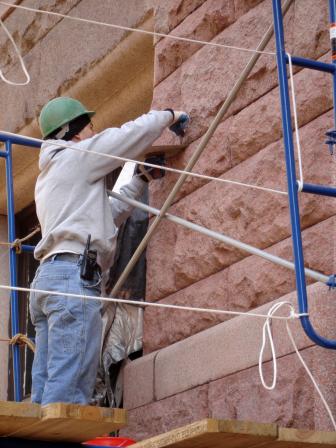
Photo: The New York State Armory in Poughkeepsie, NY was restored with Rosendale 12M natural cement mortar, custom matched to the original natural cement mortar. Brownstone repairs were performed using Custom System 45 Type SD. On-site training services brought the entire crew up to speed, for both natural cement repointing and sandstone repair.
Safety Data Sheets (SDS)
Historic Mortars
Edison Coatings is the ONLY North American source for ALL of the available major historic binders: Lime Putty, Hydrated Lime, Natural Hydraulic Lime, Natural Cement and Portland Cement – Lime. We routinely prepare custom authentic historic mortars for a wide variety of applications of all sizes.
We can work from your existing specifications, mortar analysis or recipe or we can analyze and match your mortar from provided samples. Our custom mortars typically include both custom blended aggregates to match original size, color, shape and composition as closely as possible, and historically accurate binders to match original composition and performance.
Where replication mixes are inadvisable due to poor performance or proportioning of original mortar, we can recommend mix design corrections to make your mortar look like the original, but perform as required.
| Technology | Primary Period | Products |
|---|---|---|
| Lime | 2000 BC - 19th C. | LP20 Lime Putty Spec Joint 46L |
| Natural Cement | 19th - Early 20th C. | Rosendale 12M |
| Portland Cement-Lime | Late 19th C - Present | Spec Joint 46 |
| Hydraulic Lime | Limited Use in North America | BioMix 35 |
The links below provide information on various mortar products within our line, and to mortar analysis and color-matching services:
ROSENDALE NATURAL CEMENT PRODUCTS
Natural cement was the binder of choice in North America for large scale masonry and concrete construction during the 19th and early 20th century. This technology is now offered in a series of prepackaged mortars, with or without lime additions.
Rosendale 12M Masonry Mortars
Hydraulic Limes:
BioLime NHL 3.5, NHL 5
Hydraulic Lime Mortars:
BioMix 35, BioMix 50
LP20, 20M, 20S Lime Putty, Lime Putty Mortar, Lime Putty Stucco
A complete range of lime putty and lime putty-based custom mortars and stuccos provides exceptional workability for traditional mortar, stucco and plastering applications.
SPEC-JOINT 46 Custom Masonry Repointing & Rebuilding Mortar
SPEC-JOINT 46 is a series of pre-colored, prepackaged, lime and cement-lime mortars for use in new construction and restoration. Lime mortar is formulated to match traditional historic mortars, and cement-lime mortars are formulated in accordance with ASTM C-270 specifications to provide consistent, reliable results in both performance and appearance. SPEC-JOINT 46 is simply mixed with water prior to use, and is applied in accordance with Standard Procedures for use of masonry mortar.
Products
Just as the historic uses of Rosendale Natural Cement Products® were widespread and varied, Edison Coatings, Inc. has undertaken the task of custom-formulating a wide range of historically accurate and mechanically sound Rosendale cement-based products. Custom formulation work, which Edison Coatings routinely performs in support of its full complement of Restoration Products, is offered for the Rosendale Natural Cement Products® as well.
The following groups of Rosendale Natural Cement Products® have been established:

ROSENDALE 10C NATURAL CEMENT
ROSENDALE 10C are natural cements for use in restoration of historic concrete and masonry and in green building. The cements are prepared in conformance with traditional specifications, faithfully reproducing the natural hydraulic cements used in the 19th and early 20th Centuries. Mortars, stuccos and concretes based on natural cement have endured for more than 200 years, even under severe coastal and seawater immersion service exposures, and feature high vapor permeability, tenacious adhesion and low modulus of elasticity.
ROSENDALE INJECTION GROUT 11G
ROSENDALE 11G are pre-packaged natural cement-based grouts for filling of voids in historic concrete and masonry. Grouts based on natural cement have endured for more than 135 years, even under severe coastal and seawater immersion service exposures, and feature high vapor permeability, tenacious adhesion and low modulus of elasticity.

ROSENDALE 11Gi INJECTION GROUT
ROSENDALE 11Gi is a pre-packaged natural cement-based injection grout and adhesive. Grouts based on natural cement have endured for more than 135 years, even under severe coastal and seawater immersion service exposures, and feature high vapor permeability, tenacious adhesion and low modulus of elasticity. Their primary use is for filling cracks and voids in masonry. Rosendale 11Gi’s fineness, tenacity and flow characteristics also make them excellent general-purpose masonry adhesives.
ROSENDALE 12M MASONRY MORTAR
ROSENDALE 12M mortars are custom-matched, pre-packaged natural cement-based masonry mortars for repointing or rebuilding of historic masonry. The mortars are prepared on a project-by-project basis in conformance with specified mixes and/or traditional recipes for natural cement mortars, the most widely used hydraulic mortars in 19th century North America. Mortars based on natural cement have endured for more than 150 years, even under severe coastal and seawater immersion service exposures, and feature high vapor permeability, tenacious adhesion and low modulus of elasticity

ROSENDALE 13P COMPOSITE REPAIR
ROSENDALE 13P is a series of custom-matched, pre-packaged natural cement-based mixtures for repair of stone, masonry, and historic concretes. They are prepared using a blend of natural cement and other mineral binders, and custom aggregates matching the composition and color of the original materials for maximum aesthetic, mechanical and thermal compatibility. ROSENDALE 13P is non-polymer modified.
ROSENDALE 14S STUCCO
ROSENDALE 14S are custom-matched, pre-packaged natural cement-based plasters for repair or replacement of historic renders and stuccos. It is prepared in conformance with traditional recipes for natural cement renders, which were widely used in the 19th and early 20th Centuries in North America. Stuccos based on natural cement have endured for more than 150 years, even under severe coastal service exposures, and feature high vapor permeability and low modulus of elasticity.
ROSENDALE 15W WHITEWASH
Rosendale Whitewash 15W is a series of custom-matched, pre-packaged coatings based on natural cement or natural cement-gauged lime. The coatings formulations incorporate traditional paint and whitewash recipes specified in 19th and early 20th Century U. S. Government specifications for durable whitewash. They are prepared as fully formulated, ready-to-use coatings for historic masonry substrates such as brick, stucco, stone and natural cement concrete. Rosendale Whitewash 15W features high vapor permeability, tenacious adhesion and low modulus of elasticity.
ROSENDALE 16B BETON
ROSENDALE 16 B Beton is a series of custom-matched, pre-packaged natural cement-based mixtures for repair or replacement of historic concretes. It is prepared in conformance with traditional recipes for natural cement concretes, which were widely used in the 19th and 20th centuries in North America. Concretes based on natural cement have endured for more than 150 years, even under severe coastal service exposures, and feature high vapor permeability and low modulus of elasticity.